ACT I
SCENE i
Egeon, a merchant from Syracuse in Sicily, has been captured in the enemy city of Ephesus and condemned to death: “Proceed, Solinus, to procure my fall, / And by the doom of death end woes and all” (I.i.1-2). Solinus, the Duke of Ephesus — the title is inappropriate and anachronistic (Asimov 169) — answers Egeon with an illogic probably resulting from revision (Smidt 27): “Merchant of Syracusa, plead no more. / I am not partial to infringe our laws…” (I.i.3-4). “Syracusa” suggests the playwright’s familiarity with local pronunciation vs. merely Anglicized (Farina 43). But “Egeon’s remarks to the Duke and to himself, as distinct from the story of his misfortunes, are quite incongruous with the Duke’s utterances” and Egeon’s couplets (cf. I.i.26-27, 157-158) appear amidst the Duke’s “relatively mature blank verse” (Smidt 27).
Like several so-called dukes in the canon, Solinus serves as an embodiment of the laws: he is the law (Garber 160).
if any born at Ephesus be seen
At any Syracusian marts and fairs;
Again, if any Syracusian born
Come to the bay of Ephesus, he dies,
His goods confiscate to the Duke’s dispose,
Unless a thousand marks be levied
To quit the penalty and to ransom him.
(I.i.16-22)
Of course, there’s no historical basis for any of this (Asimov 170), but it’s interesting that Shakespeare changed the location to Ephesus, a city on the Aegean coast of Asia Minor,not only linked with witchcraft in the New Testament (esp. Acts 19:13-29), but also a city dedicated to Artemis, or Diana, goddess of virginity (Garber 163), an inevitable Elizabeth connection. (The city is also the legendary site of the deaths of Mary Magdalene and John the Baptist, whose feast day is 6/24.)
Despite what seems like a death-wish — “Yet this my comfort, when your words are done, / My woes end likewise with the evening sun” (I.i.26-27) — Egeon complies with the Duke’s request for his story. Egeon says that his family consisted of himself, his wife Aemilia, and their twin sons, “the one so like the other / As could not be distinguish’d but by names” (I.i.51-52). He also brought into their home twin servant boys (a feature Shakespeare has added to his main Plautus source). They were all aboard ship when they encountered a tempest, and after some lashings to masts, the family was broken apart in the shipwreck and rescue. Aemilia sailed off with one of the twin sons and one of the twin servants; Egeon calls it “this unjust divorce of us” (I.i.104). The other two remained with Egeon.
When Egeon’s son turned 18, Egeon granted him permission to seek the missing brother and mother. This son was “Reft of his brother, but retain’d his name” (I.i.128), which seems to imply that he had taken on the name of his lost brother, a strained explanation as to why we’ll have two brothers named Antipholus — a name that means “opposed in balance” (Asimov 174). Why there are twin servants named Dromio — from the Greek word for “racecourse” (Asimov 173) — is anybody’s guess.
Egeon then set out after his son. After five years he came to Ephesus and now has been captured. The Duke is moved but the law is the law, and to recall the sentence would work “But to our honor’s great disparagement” (I.i.148). Still, if Egeon can raise a thousand marks in a day for ransom, he can live: “Beg thou, or borrow, to make up the sum, / And live: if no, then thou art doom’d to die” (I.i.153-154).
SCENE ii
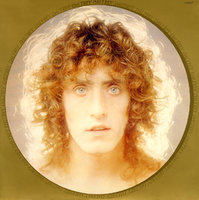
Antipholus of Syracuse, the one Egeon was looking for, is in Ephesus, thinking he shall never find his brother and mother, and being advised by a merchant to hide his identity (I.ii.1ff). He gives his servant Dromio (played by Roger Daltrey of The Who in the BBC production) 1000 marks (I.ii.8, 81) to convey to the Centaur, the inn at which they are staying.
Within this hour it will be dinner-time;
Till that, I’ll view the manners of the town,
Peruse the traders, gaze upon the buildings,
And then return and sleep within mine inn,
For with long travel I am stiff and weary.
(I.ii.11-15)
It’s a privileged perspective, an aristocratic attitude towards leisure. Antipholus speaks with the merchant until the latter says, “My present business calls me from you now” (I.ii.29) — a social extrication without the seeming craftiness of Petruchio’s use of it. Antipholus speaks more of killing time sightseeing, but refers to it specifically in this way: “I will go lose myself” (I.ii.30). Since traces of Oxford do not show up in as many Italian archives as should be, he seems to have succeeded in travelling incognito and getting lost, or losing himself, in the arts and culture.
He that commends me to mine own content,
Commends me to the thing I cannot get;
I to the world am like a drop of water,
That in the ocean seeks another drop,
Who, falling there to find his fellow forth
Unseen, inquisitive, confounds himself.
So I, to find a mother and a brother,
In quest of the unhappy, ah, lose myself.
(I.ii.33-40)
The first line of this passage echoes that of the de Vere poem beginning: “Were I a king I might command content” (Clark 16). The phrase “mine own content” occurs self-righteously in a bitter letter from Oxford to Burghley on July 13, 1576.
A moment later, the other “lost” Dromio, Dromio of Ephesus, mistakes Antipholus of Syracuse for his master, Antipholus of Ephesus, and tells him that his wife awaits him for dinner at his home, the Phoenix. Dromio delivers this bit:
She is so hot [angry], because the meat is cold:
The meat is cold, because you come not home:
You come not home, because you have no stomach:
You have no stomach… [etc.]
(I.ii.47-50)
This sequence of cascading concatenation, or anadiplosis, where the end of one line repeats at the beginning of the next (Stritmatter 19f), appears in the de Vere verse, “The Grief of Mind,” as was noted first by Looney (I 156-157, 599):
What plague is greater than the grief of mind?
The grief of mind that eats in every vein;
In every vein that leaves such clots behind;
Such clots behind as breed such bitter pain;
So bitter pain that none shall ever find,
What plague is greater than the grief of mind.
(cf. Clark 20-21; Ogburn and Ogburn 52; Ogburn 583)
Ephesian Dromio says he has been sent to summon Antipholus “Home to your house, the Phoenix, sir, to dinner; / My mistress and her sister stays for you” (I.ii.75-76). The mythical bird is featured in the love lament “The Phoenix and the Turtle” published first in the anthology Love’s Martyr (1601). Oxfordians interpret the poem as an allegorical elegy for the relationship between Queen Elizabeth and the Earl of Oxford. A well-known portrait of Elizabeth shows her holding a pendant in the shape of a phoenix.
Antipholus whacks this Dromio on the head for being a joker. Despite Antipholus’ knowledge that twins exist somewhere and despite his mission to find them, “The events can only follow if no character in the play ever sees the plainest point, and the audience must co-operate and accept the obtuseness for the sake of its own pleasure” (Asimov 173). Antipholus suspects Dromio has lost the money he gave him: a “thousand marks” (I.ii.81). This is exactly the amount of Egeon’s needed ransom money. If this originally served to bind the plots conveniently together, its relevance has been revised out of the play. But in pounds this is also the amount granted as an annuity to Oxford in 1586, an amount that appears countless times, as it were, through the works.
Antipholus distrusts the town, associated with witchcraft and cheaters in Acts of the Apostles (Garber 164):
They say this town is full of cozenage:
As nimble jugglers that deceive the eye,
Dark-working sorcerers that change the mind,
Soul-killing witches that deform the body,
Disguised cheaters, prating mountebanks,
And many such like liberties of sin….
(I.ii.97-102)
Although “liberties of sin” may also refer to districts in London with special “license,” the overall assessment of Ephesus sounds like the kind of warning Oxford would have gotten from people such as Burghley regarding his travel, especially to Italy. (Might it also apply to theater?) If the first version of this play did come from about 1576, Anne Barton’s observation in the introduction to the Riverside edition of this play makes Oxfordian sense:
Unlike Plautus, Shakespeare seems to have been less interested in the problems of the native twin angered by the perversity of a familiar world than he was in the more extreme situation of the traveler, especially vulnerable because far from home, who finds himself losing his own sense of self in an alien city of reputed sorcery and spells. (Barton 113, qtd. in Farina 43)
The Comedy of Errors, Act by Act
The Comedy of Errors Introduction
The Comedy of Errors Act I